
Graphene Heat Spreader, Thermal Conductive Silicone Cloth and Thermal Conductive Silicone Pad – A Complete Guide from Application Scenarios to Processing Practices
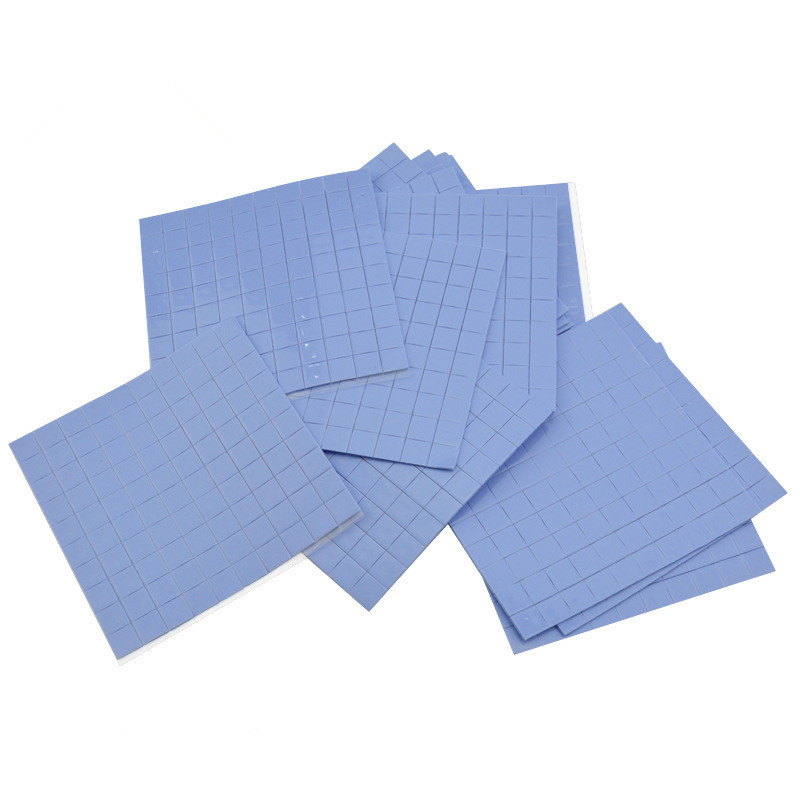
As electronic devices continue to accelerate toward miniaturization, higher power density and greater integration, heat dissipation has become a core challenge affecting device performance, stability and service life. In numerous scenarios such as CPUs, GPUs, power semiconductors, LED lighting and new energy vehicle electronic control systems, correctly selecting and applying thermal interface materials is key to ensuring successful thermal management solutions. This practical guide provides complete application scenario analysis, processing technique essentials and industry frontier trends for thermal conductive silicone pads, thermal conductive silicone cloths and graphene heat spreaders.
1. Typical Application Scenarios of Thermal Conductive Silicone Pads
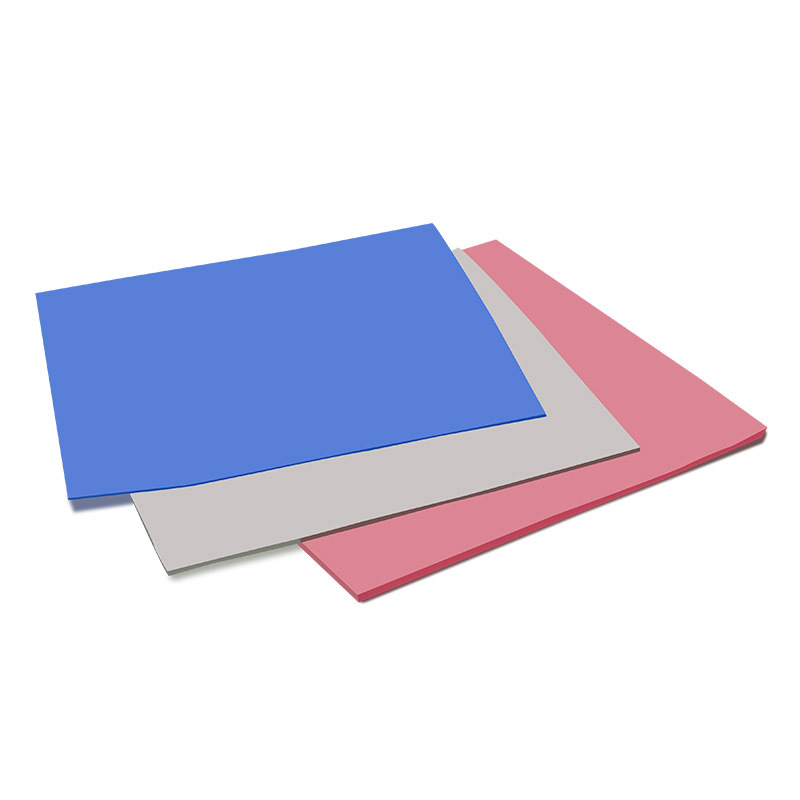
Thermal conductive silicone pads, with their combined advantages of high thermal conductivity, soft compressibility and electrical insulation, have become the most widely used thermal interface materials in the electronics heat dissipation field.
Consumer Electronics: In smartphones, tablets and laptops, silicone pads fill the gaps between CPUs, GPUs, power management chips and heat dissipation structures, rapidly transferring heat from chips to heat sinks. Due to the compact structural spaces of consumer devices, products with thermal conductivity of 1.5 to 4 W/(m·K) and lower hardness are recommended to ensure good softness and conformability.
Communication Equipment: Heat-generating components such as power amplifiers in 5G base stations, optical modules and routers require silicone pads for effective heat dissipation. Communication equipment and servers have high power density, with significant heat generation from core chips and power modules, requiring higher thermal conductivity materials (5 to 9 W/(m·K) recommended) to ensure long-term operational stability.
Automotive Electronics: Power semiconductor devices in onboard chargers, DC-DC converters, battery management systems and ADAS controllers require long-term operation in high-temperature, vibration and complex environments, with higher requirements for heat dissipation efficiency and material reliability, typically requiring products with thermal conductivity of 5 to 8 W/(m·K).
Industrial Equipment and Power Supplies: High-power devices such as power modules, inverters, frequency converters and servo drives require silicone pads to fill gaps between heat-generating components and heat sinks, while providing electrical insulation and shock absorption. Industrial equipment typically requires long-term stable operation, with products of 3 to 6 W/(m·K) recommended to achieve good balance between thermal conductivity, mechanical stability and cost.
LED Lighting: The main heat dissipation path for LED lights is typically chip → aluminum substrate → heat sink, with silicone pads primarily used to fill gaps in heat dissipation structures, with products of 1.5 to 3 W/(m·K) recommended, balancing softness and cost control.
High-Power Modules: High-power devices such as IGBT modules and AI computing modules generate significant heat with stringent interface thermal resistance requirements, requiring high thermal conductivity materials of 8 to 12 W/(m·K) to rapidly transfer heat to heat sinks.
2. Application Advantages and Typical Scenarios of Thermal Conductive Silicone Cloth
Thermal conductive silicone cloth, reinforced with glass fiber base material, offers excellent tensile strength, wear resistance and electrical insulation, making it an ideal replacement for traditional mica sheets and thermal greases, particularly suitable for power device insulation and thermal conductivity scenarios requiring screw fixation.
Switching Power Supplies: Insulation and thermal conductivity between power devices such as MOSFETs and rectifier diodes and heat sinks. Silicone cloth integrates insulation and thermal conductivity functions, eliminating the need for additional grease and simplifying installation, suitable for screw-fixed installation methods. Its glass fiber reinforced structure provides excellent tear resistance and wear resistance, effectively avoiding breakage during screw tightening.
Automotive Electronics: Insulation filling between heat-generating components and heat sink modules or housings in power battery packs and onboard charger MOS tubes. The high dielectric strength (up to 6kV and above) and high chemical corrosion resistance of silicone cloth enable long-term reliability in harsh automotive operating environments.
Communication Power Equipment: Power devices in communication power supplies generate significant heat, typically dissipating through aluminum housings. Silicone cloth placed between power devices and housings achieves both heat dissipation and electrical isolation. Products with dielectric strength reaching 6.0kV AC fully meet isolation requirements, while good extensibility characteristics can adapt to product structural changes. This material has been widely used in switching power supplies, large motors, high-precision equipment and 4G/5G communication power supplies.
Home Appliances and Industrial Control: Power semiconductor insulation and thermal conductivity in air conditioner inverter modules, refrigerator compressors, washing machine controllers and industrial frequency converters. Silicone cloth offers affordable pricing with outstanding cost-effectiveness, recognized by many customers.
3. Cutting-Edge Applications and Breakthroughs of Graphene Heat Spreaders
Graphene heat spreaders represent the cutting-edge direction of thermal interface materials, with ultra-high thermal conductivity and extremely low thermal resistance as their core advantages, rapidly penetrating AI chips, new energy vehicles and high-end consumer electronics.
AI Computing and Data Centers: During operation, internal transistor and other components in AI chips continuously operate at high speed, generating substantial heat. Research shows that for every 10°C increase in chip temperature, reliability may decrease by approximately 50%. Using advanced orientation processes, Hofon New Materials graphene thermal pads possess outstanding through-plane thermal conductivity, rapidly transferring heat generated by AI chips and significantly reducing thermal resistance between chips and heat sinks. Products achieve thickness of 0.3mm, thermal conductivity >90W/(m·K), thermal resistance ≤0.1°Ccm²/W (@40 psi), and compression ratio ≥50%, already applied in autonomous driving, edge computing and other AI scenarios. In the AI server field, a single H100 GPU consumes 700W of power, requiring TIM with high thermal conductivity to avoid thermal throttling.
New Energy Vehicle Thermal Management: The proliferation of silicon carbide power devices imposes stringent heat dissipation requirements. Honglingda has successfully broken through the technical bottleneck of traditional synthetic graphite, controlling graphene stack thickness to approximately 100 microns and developing high-power graphite films with heat dissipation speed four times faster than metal, making them the highest quality thermal management materials for 5G terminal products and new energy vehicle thermal management systems. The independently developed graphene fiber thermal interface material achieves ≥55 W/(m·K) with 100% proprietary intellectual property rights. Honglingda has also been the first to launch high-power thermally conductive graphite thick film products, truly achieving single-layer ultra-thick high-power graphite film roll products, and pioneered the “zero-edge” graphite module, laying engineering application foundations for high-power graphite to replace heat pipes and vapor chambers.
5G Communications and Mobile Devices: The power density of 5G base station AAUs and optical modules has significantly increased, with conventional thermal materials unable to adequately meet 5G market requirements. Graphene heat spreaders, with their lightweight, ultra-thin and high thermal conductivity characteristics, have become the preferred solution for efficient heat dissipation. The new graphene heat dissipation products achieve heat dissipation speed four times faster than metal, making them the highest quality thermal management materials for 5G terminal product thermal management systems. Roll-to-roll continuous coating processes enable film preparation with width exceeding 1 meter and yield exceeding 95%, with commercial mass production already achieved.
4. Processing Technique Essentials for Thermal Interface Materials
Silicone Pad Processing and Installation: Silicone pads can be manually cut or custom die-cut to adapt to different shapes and sizes. Before installation, clean heat source and heat sink surfaces to remove oil and dust; place the silicone pad between heat source and heat sink, compress it 10% to 30% through structural clamping; for self-adhesive products, direct adhesion fixation is possible; after installation, check for misalignment or wrinkles. For high-precision die-cutting processing, steel rule dies, engraved dies or rotary dies can be used, achieving tolerances of ±0.05mm, supporting value-added services such as adhesive backing and rewinding.
Silicone Cloth Processing and Installation: Silicone cloth supports punch forming and die-cutting processing, capable of being die-cut or punched into any shape according to requirements, suitable for screw-fixed installation methods. Its tear resistance and wear resistance characteristics support punch forming, suitable for high-volume automated production. It can be processed with adhesive backing into different shapes to meet diverse requirements, or single-side processed to enhance mechanical properties, and can be directly adhered to component surfaces without screw reinforcement. During installation, ensure the silicone cloth is placed flat between power devices and heat sinks with full contact and no air bubbles.
Graphene Heat Spreader Processing and Installation: Graphene heat spreaders can undergo precision die-cutting and laser cutting processing. Die-cutting is suitable for high-volume standardized product production, achieving tolerances of ±0.05mm; laser cutting has no tooling costs, suitable for complex contours and rapid prototyping, with minimum tolerances of ±0.01mm. During installation, confirm whether the product has insulation edge banding design to avoid electrical short-circuit risks. Mounting pressure is recommended above 20psi to ensure good contact surface conformity. In scenarios with stringent flexibility and space constraints such as mobile devices and flexible electronics, graphene heat spreaders can withstand 100,000 bend cycles after multi-layer stacking with bending radius <2mm.
5. Quality Certifications and Reliability Assurance
High-quality thermal interface material products should pass multiple quality certifications. For flame retardancy safety: UL 94 V-0 or VTM-2 certification. For environmental compliance: RoHS, REACH and SGS environmental testing. For insulation performance: compliance with ASTM D149, ASTM D150 and other international test standards. For production systems: ISO 9001 quality management system and ISO 14001 environmental management system certifications. Most professional manufacturers provide 5 to 10 years of product quality warranty.
For high-reliability application scenarios, it is recommended to select products that have passed reliability testing of 1000 hours or more. For example, the SC2000FG thermal conductive silicone cloth has passed 1000-hour reliability testing with dielectric strength exceeding 4000V, providing high thermal conductivity while avoiding insulation breakdown that could damage equipment components.
6. Market Outlook and Development Trends
Continued Market Expansion: According to YH Research market data, the global TIM market revenue is estimated at RMB 16.26 billion in 2025, projected to reach RMB 31.73 billion by 2032, with a compound annual growth rate of 10.1% from 2026 to 2032. Global thermal interface materials revenue was approximately USD 2.391 billion in 2025, projected to reach USD 4.665 billion by 2032. The Asia-Pacific region dominates the global thermal interface materials market, holding a 52.37% market share in 2025.
Dual Drivers of AI and New Energy: In the AI server field, high-TDP CPUs and GPUs continue to increase in power consumption, with a single H100 GPU consuming 700W, requiring TIM with thermal conductivity ≥10 W/(m·K). In the new energy vehicle field, the proliferation of silicon carbide power devices imposes higher requirements on TIM. According to data from the China Association of Automobile Manufacturers, the TIM market size for domestic new energy vehicles continues to expand, with the proportion of carbon-based materials increasing rapidly.
Carbon-Based Materials Breaking Thermal Conductivity Limits: Carbon-based materials, with their exceptionally high intrinsic thermal conductivity, have become the R&D focus for next-generation TIM. Graphene thermal films achieve thermal conductivity of 1200 to 1500 W/(m·K), with localization rates continuously increasing and costs reduced by 40% compared to imports. Vertically aligned carbon nanotube array films achieve in-plane thermal conductivity of up to 800 W/(m·K) with controllable thickness down to 10μm, already applied in battery thermal management systems. The proportion of graphene-based TIM used in global supercomputing centers has jumped from 12% in 2021 to 38% in 2024.
Value Proposition of Choosing TIM: Choosing high-quality thermal interface materials means selecting comprehensive assurance of heat dissipation efficiency, electrical safety and long-term reliability. From basic heat dissipation protection in consumer electronics, to high-power thermal management in AI servers, to safety isolation in new energy vehicle battery packs, thermal conductive silicone pads, thermal conductive silicone cloths and graphene heat spreaders serve every aspect of modern industry with their respective performance advantages. With increasingly stringent environmental regulations and continuously expanding emerging application fields, thermal interface materials are trending toward higher performance, lighter weight and more environmentally sustainable development.
 Comprehensive Technical Analys
 How to Choose PORON Foam and R
Graphene Heat Spreader, Therma
How to Choose PORON Foam and R
Graphene Heat Spreader, Therma
 Thermal Conductive Silicone Pa